What is Epoxy Resin? Uses, Types & Complete Guide
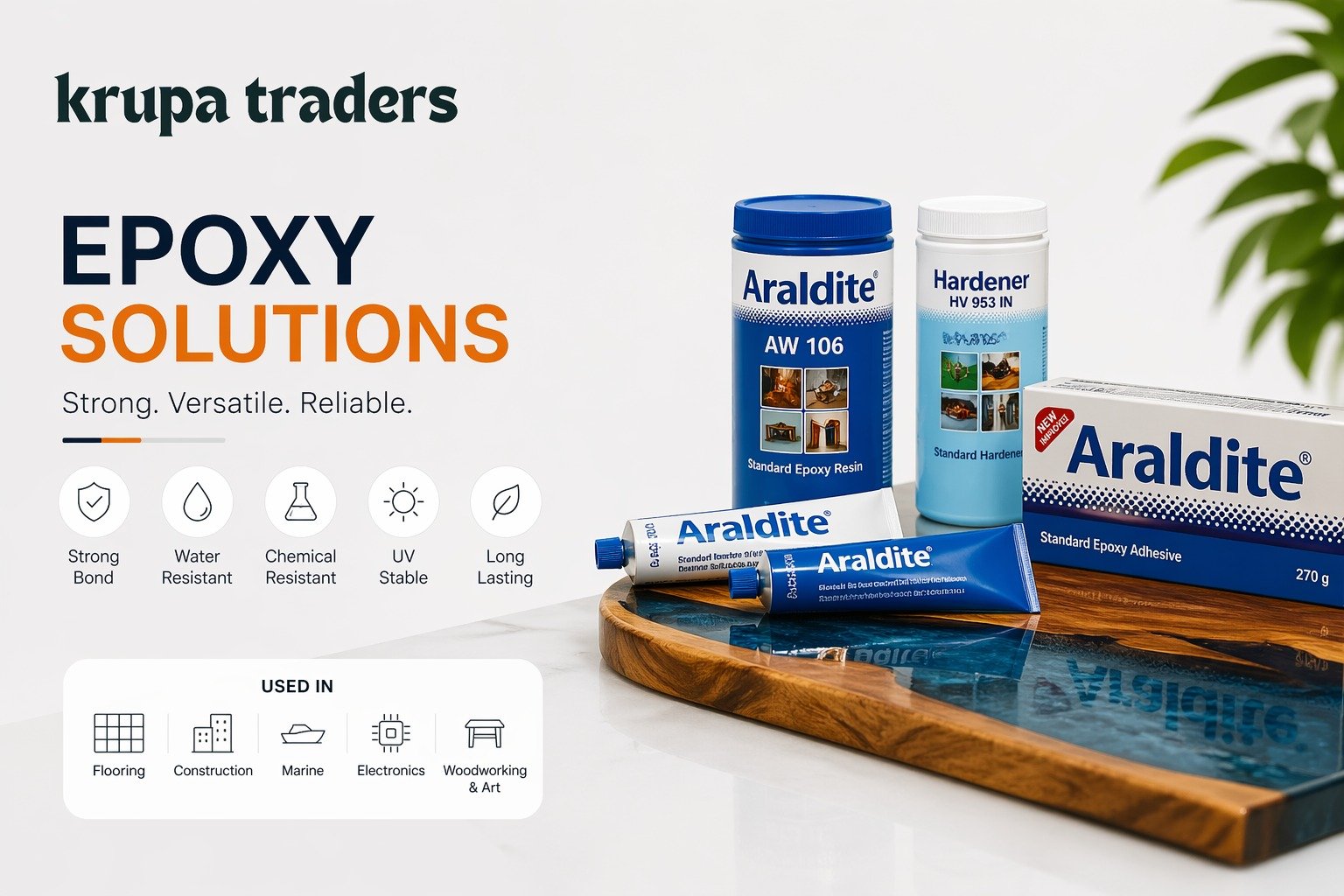
You've seen it on kitchen countertops, factory floors, boat hulls, and resin art videos on Instagram. But what exactly is epoxy resin — and why does everyone seem to use it?
The short answer: it's one of the strongest, most versatile materials on the planet. The longer answer is what this guide is all about.
At Krupa Traders, we've been supplying quality epoxy resin and epoxy materials across India for years. Here's everything you need to know — no jargon, no fluff.
So... What Exactly Is Epoxy Resin?
Epoxy resin is a two-part liquid system. On its own, each part does nothing interesting. But when you mix them together — magic happens.
Part A is the epoxy resin (the base). Part B is the hardener. Mix them in the right ratio, and they trigger a chemical reaction called polymerisation. The result? A rock-hard, incredibly durable solid.
Think of it like making cement
Two things that only become powerful when combined.
Once cured, epoxy resin is:
- Waterproof
- Extremely strong
- Chemically resistant
- Smooth and glossy
- Bonded so tightly it's nearly impossible to remove
That combination makes epoxy materials useful in construction, art, electronics, marine engineering, and way more.
Types of Epoxy Resin (And When to Use Each)
Not all resin epoxy is the same. Picking the wrong type is one of the most common (and costly) mistakes. Here's a breakdown:
BPA Epoxy Resin — The Everyday Workhorse
The most widely used type. Great for flooring, adhesives, coatings, and composites. Affordable, reliable, and widely available. If you're not sure which to pick — start here.
Novolac Epoxy — For Extreme Conditions
Built for heat and harsh chemicals. Used in industrial pipe linings, chemical tanks, and high-temperature coatings. When BPA isn't tough enough, novolac steps in.
Cycloaliphatic Epoxy — For Outdoor Use
UV-stable and crystal clear. Standard epoxy yellows in sunlight — this one doesn't. Ideal for outdoor coatings, electrical encapsulation, and anything exposed to sunlight.
Flexible Epoxy — For Movement & Vibration
Modified to flex slightly instead of cracking. Great for bonding different materials, electronics encapsulation, and anything that expands, contracts, or vibrates.
Waterborne Epoxy — The Eco-Friendly Option
Low VOC, water-based, and much easier on the lungs. Perfect for interior flooring and coatings in confined spaces. Doesn't compromise on durability.
Art / Casting Resin — For Creative Projects
Ultra-clear, self-levelling, and pours like water. Made for river tables, resin art, jewellery, and countertops. Cures to a stunning glass-like finish.
Where Is Epoxy Resin Actually Used?
Here's where epoxy resin quietly runs the world:
🏗️ Construction & Flooring
Walk into any warehouse, hospital, or factory — that smooth, seamless floor? Epoxy. It's also used for concrete repair, crack injection, and anchoring bolts into walls. Tough and easy to clean.
⚓ Marine & Automotive
Boat hulls are laminated with resin epoxy for strength without weight. In automotive, it's used for body repair, composite panels, and anti-corrosion undercoating.
💡 Electronics
PCBs, transformers, motors, and LEDs all rely on epoxy materials for insulation and potting. It protects sensitive components from moisture, heat, and vibration.
🪵 Woodworking & Art
River tables. Geode art. Jewellery. Countertops. Epoxy resin has become the darling of makers and designers — and for good reason. The results are stunning and incredibly durable.
How to Pick the Right Epoxy for Your Project
Five questions to ask before you buy:
- What surface am I working on? (concrete, wood, metal, fibreglass?)
- Will it be exposed to heat, chemicals, or sunlight? (affects which type you need)
- Do I need it to be transparent? (art resin vs industrial coating)
- How much working time do I need? (slow cure = more time to work)
- Is the space well-ventilated? (if not, go waterborne)
Still not sure?
The team at Krupa Traders is happy to help you choose. Visit krupatraders.com or reach out directly.
Quick Safety Reminders
Cured epoxy is completely safe. But uncured epoxy resin needs a little respect:
- Always wear nitrile gloves — uncured resin irritates skin
- Work in a ventilated space or use a respirator
- Don't eyeball the mix ratio — wrong ratios = soft, sticky, ruined project
- Keep away from heat sources during mixing (it generates its own heat)
- Dispose of leftover uncured resin as per local guidelines
5 Pro Tips That'll Save Your Project
We've seen a lot of epoxy jobs go wrong for avoidable reasons. Here's what the pros know:
- Warm your resin before mixing. Warmer resin flows better and produces fewer bubbles. Sit the bottle in warm water for 5–10 mins.
- Mix slowly. Fast mixing = air bubbles = cloudy finish. Slow and steady wins every time.
- Use a heat gun lightly. A quick pass over the surface pops bubbles instantly. Don't hover — just sweep.
- Clean surfaces first. Epoxy won't bond to dust, grease, or moisture. Prep is 80% of the job.
- Don't rush the cure. Let it fully cure (24–72 hrs) before putting any stress on it. Patience = a better result.
Why Krupa Traders for Your Epoxy Needs?
We're not just a supplier — we're the people who help you get the project right.
- Wide range of epoxy resin for every application
- Quality products from certified, trusted manufacturers
- Expert advice — we'll help you choose the right epoxy materials
- Competitive pricing with reliable delivery across India
- After-sales technical support, because we care about your results
Explore our full range at krupatraders.com — or reach out to us directly.
FAQs — Your Questions, Answered
Epoxy resin uses a hardener for a chemical cure — stronger, less shrinkage, better adhesion. Polyester resin uses a catalyst and typically has more odour and lower performance.
Yes! Once cured, it's fully waterproof — which is why it's used for boat hulls, bathroom floors, and outdoor countertops.
Most epoxy resin reaches initial set in 6–12 hours and full cure in 24–72 hours. Fast-cure formulations can set much quicker.
Standard epoxy can yellow in UV light. For outdoor projects, use UV-stable cycloaliphatic resin or add a UV-protective topcoat.
Krupa Traders supplies high-quality epoxy resin and epoxy materials across India. Visit krupatraders.com to explore products or get in touch with our team.
Wrapping Up
Epoxy resin is genuinely one of those materials where the more you understand it, the more useful it becomes. It's not just industrial glue — it's a platform for building things that last.
Whether you're sealing a factory floor, building a boat, making art, or fixing something that needs to stay fixed — there's an epoxy for that. And Krupa Traders is here to help you find it.
Ready to get started?
Browse our full range of epoxy resin & epoxy materials at
krupatraders.com
© Krupa Traders | krupatraders.com | Epoxy Resin Specialists India